
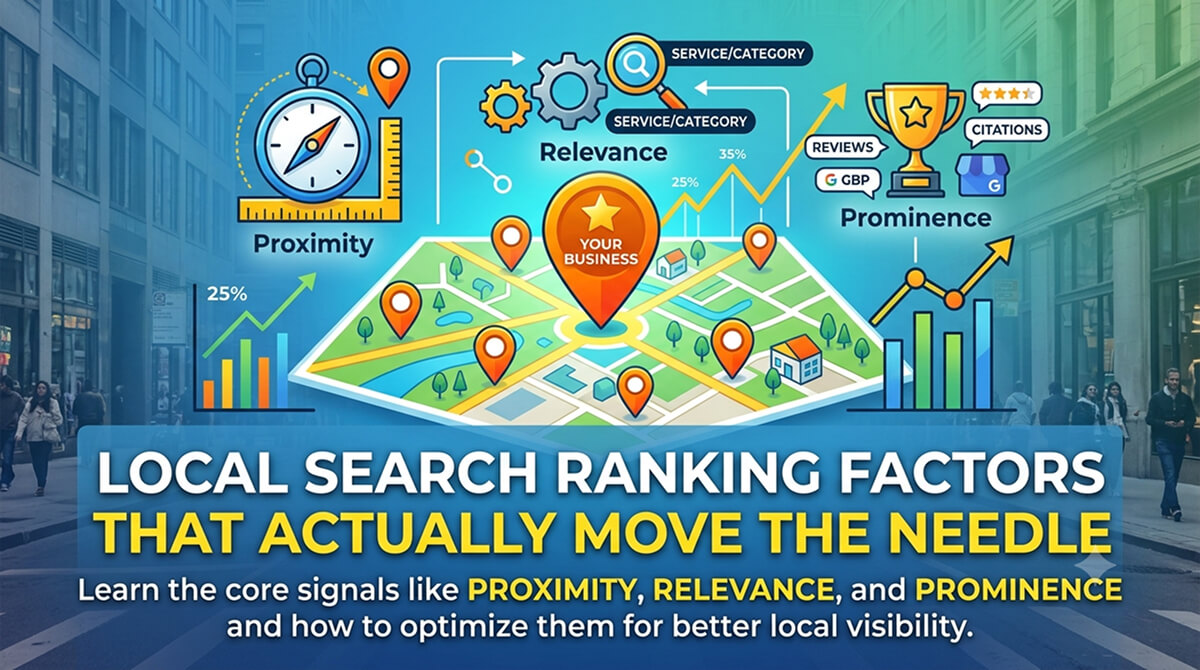
There’s a lot of conflicting advice online about what actually helps local search performance and what doesn’t. Some of it is outdated, some was never accurate, and some applies to national search but not to local results specifically. Here’s what the research and real-world practitioner experience consistently show matters for local businesses trying to improve their visibility.
Proximity, Relevance, and Prominence: What Each One Means
Google’s local ranking algorithm acknowledges three core factors: proximity (how close your business is to the searcher), relevance (how well your business matches what they’re searching for), and prominence (how well-known and established your business appears across the web).
You can’t control proximity that’s geography. You can influence relevance through accurate category selection and specific business descriptions. And prominence? That’s where your citation presence, review history, and overall digital footprint come in. It’s also the factor you have the most ability to actively build over time.
Why Prominence Is the Factor You Can Control
Prominence is essentially the web’s collective assessment of your business’s credibility. It’s reflected in how many legitimate sources reference your business, how complete and accurate your Google Business Profile is, the quantity and quality of your reviews, and how your business appears in established directories.
This is why citation building and directory listing have practical, measurable value. Being listed on established platforms like bizplus24.com is another legitimate source confirming your business’s existence and operational details which directly contributes to the prominence signals that influence local visibility.
The Category and Review Factors Most Owners Underestimate
Your primary business category tells search engines which queries to show you for. This is one of the most directly impactful decisions you can make, and it’s often set carelessly. Research the specific categories available on each platform and choose the one that most precisely describes your primary service specific beats general almost every time.
On the review side, recency matters as much as volume. A business with 50 reviews from three years ago may rank below one with 20 reviews from the past six months. Systematically and authentically collecting recent reviews is one of the most consistently impactful local visibility actions available to small businesses.
Frequently Asked Questions
What's the most important single factor for local search performance?
There isn't one it's always a combination. But if you're just starting: claim and fully complete your Google Business Profile. That single action addresses proximity accuracy, relevance signals, and prominence indicators more directly than almost anything else you can do.
Do I need to hire a local SEO agency to rank well locally?
Not necessarily. The core fundamentals GBP optimization, citation building, systematic review collection are DIY-accessible. If you're in a highly competitive market or manage multiple locations, professional help often pays for itself. But the foundational work is manageable independently.
Does having more Google reviews guarantee better local rankings?
Not guarantee but more recent reviews strongly support local prominence signals. They work in combination with accurate citations, proper category selection, and other factors. No single element works in isolation; consistent improvement across all factors produces the best results.
How often should I check my local search performance?
Monthly is a reasonable baseline for most businesses. Local results fluctuate based on searcher location, algorithm updates, and competitive changes. Focus on improving the underlying signals citations, reviews, GBP completeness rather than obsessing over daily position changes.
Does the distance between my business and the searcher really matter that much?
It's a significant factor, yes especially for immediate-need searches. For service area businesses without a storefront, defining your service area accurately in your listings is important. For location-based businesses, appearing in all the right categories becomes even more critical to offset proximity limitations.